
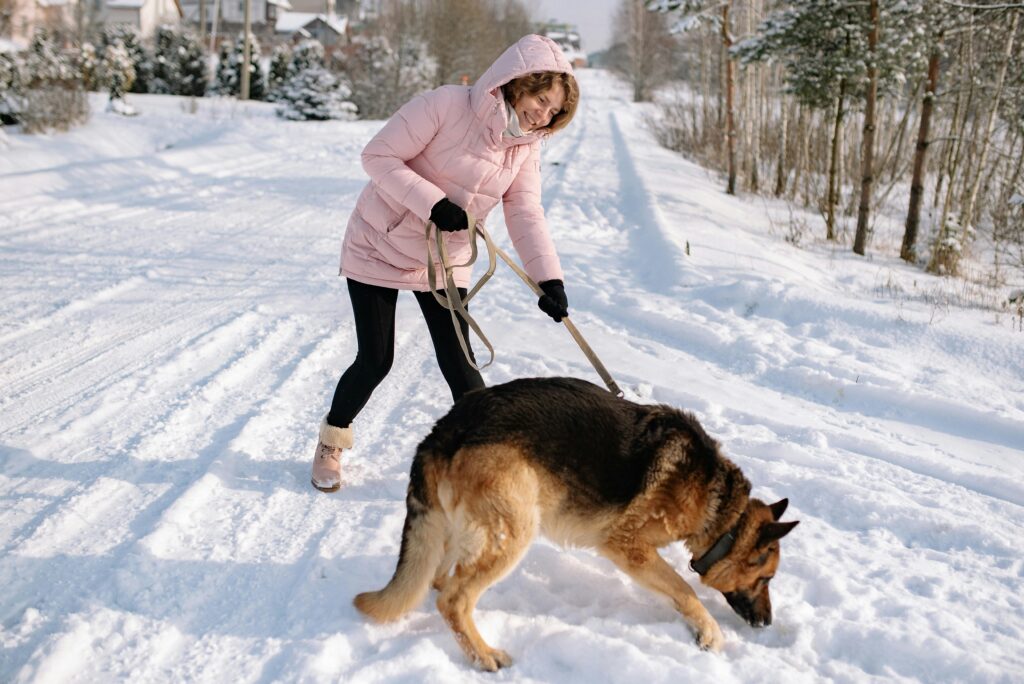
Learn how to stop your dog from pulling on the leash with 3 simple habits, calm training, and a practical loose leash walking routine that works.
If you are trying to figure out how to stop your dog from pulling on the leash, you are not alone.
For many dog owners, walks start with good intentions and end in frustration. Your dog surges forward, your arm tightens, your shoulder starts to ache, and within minutes the walk feels more like a struggle than quality time together. After enough difficult walks, many owners start wondering whether their dog is stubborn, dominant, or simply impossible to train.
In most cases, the real issue is simpler than that. Dogs pull because pulling often works. They move faster than we do, the environment is highly rewarding, and many owners accidentally reinforce leash tension without meaning to.
The good news is that leash pulling usually improves when you stop chasing a perfect walk and start building a few small, repeatable habits that actually work in daily life.
The direct answer
To stop your dog from pulling on the leash, reward the walking behavior you want, make pulling less successful, and practice the same simple leash habits consistently. Loose leash walking improves fastest when training is calm, clear, and repeated often enough to become part of the walk itself.
Why dogs pull on the leash
Dogs usually pull because pulling gets them closer to what they want.
That may be a smell, another dog, a person, open space, a tree, or simply forward movement. Dogs also tend to walk faster than humans by nature, so our pace often feels slow to them. When a tight leash still leads to progress, the dog learns a very clear lesson:
tight leash = I get there
That does not mean your dog is trying to dominate you. It usually means your dog is excited, under-trained for that environment, or has built a strong reinforcement history around moving forward.
Common reasons dogs pull
- their natural pace is faster than ours
- the environment is more rewarding than the handler
- pulling has worked many times before
- they get overstimulated outdoors
- they have not yet learned a strong habit of checking in
Paw Smart Habits Insight:
Your dog does not need harsher correction. Your dog needs a clearer pattern.
Habit 1: Stop and wait until the leash is loose
The first habit is simple: when the leash goes tight, stop moving.
This matters because forward movement is often the reward your dog wants most. If pulling always leads to progress, pulling gets stronger. If pulling pauses progress and a loose leash makes the walk continue, your dog starts learning a new rule.
The key is consistency.
Do not yank back. Do not drag your dog. Just stop. The moment the leash softens or your dog shifts attention back toward you, move again.
Example
Your dog pulls toward a lamp post to sniff.
Instead of following the tension, you stop.
Your dog pauses, turns slightly, or the leash loosens.
You move forward again.
That moment teaches the lesson you want:
loose leash makes good things happen
Why this habit works
- it changes the reinforcement pattern
- it makes the leash easier to understand
- it stops rewarding pulling with automatic progress
Common mistake
Using this only occasionally. If your dog pulls several times and still gets where they want on the next attempt, the habit stays unclear.
Quick tip
Use this especially in the first minutes of the walk, when pulling patterns often begin.
Habit 2: Change direction instead of pulling back
Sometimes stopping alone is not enough.
Some dogs lean into leash pressure, become more frustrated, or barely notice that you have paused. In those moments, a calm direction change often works better than pulling back against the dog.
Instead of creating a tug-of-war, turn and walk a few steps in the other direction. Use a calm cue like “Let’s go” if you want. When your dog catches up and the leash relaxes, reward and continue.
Example
Your dog locks onto something ahead and starts pulling hard.
Rather than bracing and holding tension, you turn, move a few steps away, and let your dog reconnect with you.
Once the leash softens, you reward and continue.
This interrupts the pulling pattern without turning the walk into a physical contest.
Why this habit works
- it breaks the forward-pulling rhythm
- it redirects attention back to you
- it reduces the conflict many owners create by pulling back
Common mistake
Turning too late, after your dog is already highly aroused. Direction changes work best when you use them early.
Quick tip
Practice your turn cue indoors or in the garden before using it outside.
Paw Smart Habits Insight:
Do not wait for chaos. Build the habit of resetting early.
Habit 3: Reward the position you want
This is the habit many owners underestimate.
Most people spend so much energy reacting to pulling that they miss the chance to reinforce the exact walking position they want. But if you want loose leash walking, you need to make the right position worth repeating.
That position might be directly next to you, slightly ahead of you, or anywhere inside a relaxed leash zone. The exact picture matters less than clarity and consistency.
At the beginning, reward frequently.
The magnet-hand idea
Hold a few treats on the side where you want your dog to walk. As your dog stays near that area, mark and reward. This helps your dog understand where the good walking zone is.
You can then reward:
- one or two good steps
- a check-in
- a loose leash near a distraction
- staying with you after a turn
And remember: food is not the only useful reward. For many dogs, moving forward or getting permission to sniff is highly valuable too.
Why this habit works
- it gives your dog a clear success picture
- it builds understanding, not just inhibition
- it makes good walking feel worthwhile
Common mistake
Waiting too long to reward. Early in training, many owners expect too much too soon.
Quick tip
On your next walk, reward the first five loose-leash moments you notice instead of waiting for a perfect stretch.
Paw Smart Habits Insight:
Small wins shape behavior faster than late frustration.
Why these 3 habits work better than random corrections
These three habits work because they create a simple learning loop:
- pulling pauses or redirects progress
- loose leash earns movement or rewards
- the dog gets repeated feedback about what works
That is much clearer than random leash pressure, verbal frustration, or changing rules from one day to the next.
This is also where the Paw Smart Habits approach matters most.
Many loose leash walking plans fail not because owners do not care, but because they are inconsistent. One day they stop. The next day they rush. Sometimes they reward. Sometimes they forget. Sometimes they let the dog pull because they are tired or in a hurry.
From the dog’s point of view, the rules keep changing.
Habits solve that problem. When you repeat the same three responses often enough, your own behavior becomes more predictable. And once your behavior becomes more predictable, your dog has a much better chance of learning.
A simple 5-minute loose leash walking routine
You do not need every walk to become a long training session. You need a short routine you can actually repeat.
The 5-minute Paw Smart Habits routine
1. Pause at the door
Wait for one moment of leash slack before opening it.
2. Reward the first check-in
As soon as your dog looks back at you outside, mark and reward.
3. Use Habit 1
If the leash tightens, stop and wait.
4. Use Habit 2 when needed
If your dog is pulling hard and locked forward, turn and reset.
5. Use Habit 3 throughout
Reward the position you want in short, easy moments.
6. Release intentionally
After a small success, let your dog sniff or explore.
This makes the system realistic. It is not based on forcing perfect performance. It is based on repeating a few clear behaviors until they become familiar for both of you.
What equipment helps with dog pulling on the leash
Good equipment does not replace training, but it can make training easier, safer, and more consistent.
For this topic, keep the setup simple.
1. A well-fitted no-pull harness
A front-clip or no-pull harness can help reduce neck pressure and give you more control without relying on pain. It supports training best when it fits well and is used together with consistent handling.
2. A treat pouch
Fast reinforcement matters. A treat pouch makes it much easier to reward on time, especially outdoors.
Recommended setup for calmer walks:
A well-fitted no-pull harness plus a treat pouch is often the simplest starting point for loose leash training that is clear, humane, and repeatable.
See the gear setup that supports calmer, more consistent walks.
What if your dog pulls even more when you stop?
That can happen.
Some dogs try harder before they adjust. This is one reason owners often feel that stop-and-wait does not work. Usually the issue is not the idea itself, but inconsistent use, not enough reinforcement for the right moments, or an environment that is too difficult too soon.
If your dog pulls harder:
- lower the difficulty of the environment
- reward faster when the leash softens
- use more early direction changes
- shorten the training stretch
- help your dog find success sooner
In other words, do not only make pulling harder. Make the right choice easier to find.
How to know you are making progress
Progress does not always look dramatic.
Sometimes it looks like:
- one earlier check-in
- one softer leash near the house
- one quicker recovery after a distraction
- one calmer start at the front door
- one less frustrating walk than last week
Those changes matter because they show the pattern is shifting.
That is the heart of Paw Smart Habits:
big change usually starts with repeated small wins
FAQ: how to stop dog pulling on leash
Why does my dog pull on the leash?
Most dogs pull because they want to move faster, reach something interesting, or because pulling has worked before.
Is leash pulling a dominance issue?
Usually not. It is more often explained by excitement, natural pace, the environment, and reinforcement history.
Should I stop every time my dog pulls?
In most cases, yes, if you are using the stop-and-wait habit. But be consistent and combine it with rewarding loose leash moments.
Is changing direction better than pulling back?
Usually yes. A calm direction change often interrupts pulling more clearly and with less conflict than pulling against the dog.
What is the best reward for loose leash walking?
Food works well, but sniffing, moving forward, and access to the environment can also be strong rewards.
How long does loose leash walking take?
That depends on the dog, the environment, and how consistently you practice. For many dogs, it improves gradually over weeks and months.
Conclusion
If you want to know how to stop your dog from pulling on the leash, make the process simpler, not harsher.
Do not try to fix everything in one walk. Build three habits instead:
- stop and wait
- change direction
- reward the position you want
Then repeat them calmly and consistently enough that your dog can actually learn from them.
That is what Paw Smart Habits is about: not bigger reactions, but better patterns.