
Dog anxiety is common. That still does not mean every worried, reactive or restless dog has the same problem.
Some dogs panic when left alone. Some unravel around noise. Some look “hyper” when they are really overloaded. Some are painful, underslept or stuck in a lousy routine. That difference matters, because anxious dogs do not need harder handling. They need cleaner diagnosis and better regulation.
The old habit of treating everything as “disobedience” makes this worse. A dog with a fried nervous system is not in a good place to learn.
1. Stop calling it bad behavior before you rule out pain and overload
This is the first mistake.
Sudden behavior change can be a health issue before it is a training issue. Pain, sickness and other medical problems often show up as avoidance, irritability, clinginess or restlessness long before owners think “vet.”
That means a dog who starts pacing, guarding space, reacting harder, refusing walks or panicking when left alone does not need a lecture. The dog may need an exam.
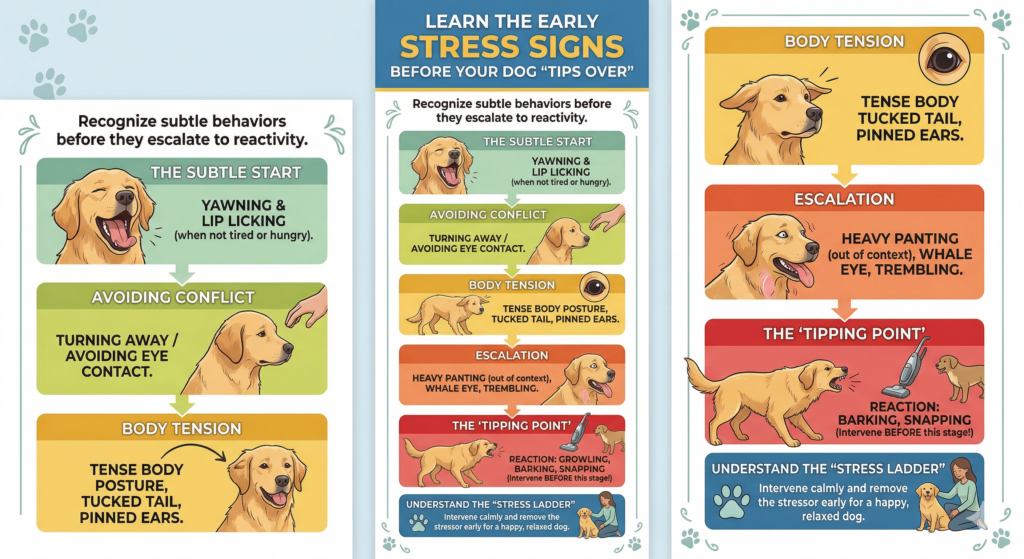
2. Learn the early stress signs before your dog tips over
Most owners miss the useful part.
They notice barking, lunging, destruction or full panic. By then the dog is already in trouble. The better skill is reading the lower-level signs early: lip licking, yawning, looking away, paw lifting, panting, pacing, body tension and hard eyes.
That is where progress lives. Earlier. Quieter. Less dramatic.
3. Drop the “tired dog” myth for anxious dogs
Exercise matters. Chaotic over-arousal is a different thing.
A lot of anxious dogs do not need more frantic fetch. They need more regulated activity. Repetitive high-arousal games can leave some dogs more wired, not calmer.
Walk your dog, but do not confuse adrenaline with calm.
4. Build one calm routine your dog can predict
Predictability reduces friction.
One of the best practical tools here is a calm station: a mat, bed or rug that always means the same thing. Slow pace. Quiet body. Rewarded relaxation.
Keep this part simple:
- same mat
- same room at first
- short sessions
- reward loose muscles, soft eyes and stillness
- stop before the dog falls apart
Do not try to look clever. Boring is good here.
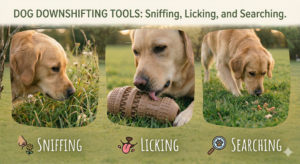
5. Use sniffing, licking and searching as downshift tools
These are not magic. They are useful.
Food searches in boxes, snuffle mats, scatter feeding and lick mats can help redirect an anxious dog into a slower task. They are practical because they give the dog a job and often reduce frantic bouncing around the house.
Easy options:
- scatter part of dinner in grass or on a snuffle mat
- hide treats in boxes
- use a lick mat during predictable low-level stress moments
- turn one walk a day into a slow sniff walk
The dog usually does not need a new gadget. The dog needs a lower gear.
6. Respect trigger stacking
This one is real, and owners ignore it all the time.
Trigger stacking means stressors pile up before the dog has returned to baseline. A vet visit, rough walk, doorbell storm, loud delivery van and evening guests can land on the same dog in the same day. Then people act shocked when the dog explodes over something tiny.
The useful takeaway is not a fake-precise universal timer. The useful takeaway is this: after a hard event, give the dog real decompression time. Sometimes that is minutes. Sometimes it is much longer.
Do not stack more pressure on top just because the calendar says training time.
7. Be skeptical with products, but not cynical
Some products help some dogs. Very few deserve miracle language.
Pheromones, calming supplements, special beds and tracking tools may support some dogs, but they are not the backbone of the plan. Support tools are fine, but they do not replace management, training and veterinary judgment.
That is the rule for anxious-dog gear in one sentence: support tools can help, but they do not do the work for you.
What helps most anxious dogs first
Start here before you go shopping:
- rule out pain or sudden medical change
- reduce unnecessary chaos
- read early stress signs sooner
- build one predictable calm routine
- use sniffing and food search to lower arousal
- stop stacking hard days on top of each other
- get behavior-vet help for severe separation panic, self-injury or rapid decline
That is less glamorous than “2026 anxiety breakthrough tech.” It is also more useful.
FAQ
What are the first signs of dog anxiety?
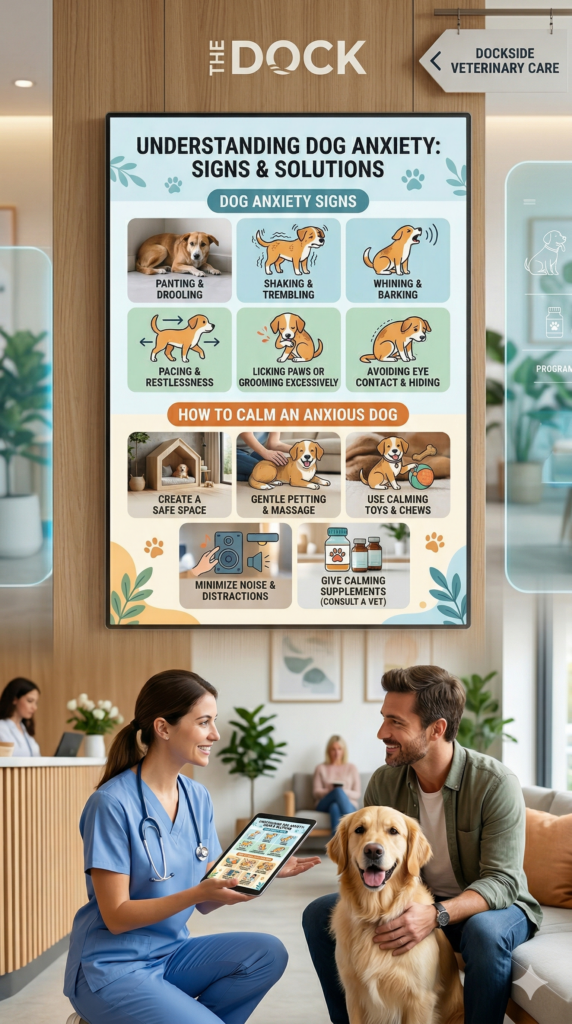
Common early signs include lip licking, yawning, looking away, panting, pacing and body tension. These often show up before barking, destruction or panic.
Does sniffing really calm dogs down?
It often helps. Sniffing gives many dogs a slower, more focused task and can be a practical way to lower arousal.
Do calming products work for dog anxiety?
Some may help as support tools. Severe anxiety usually needs a broader plan that includes management, training and sometimes veterinary support.
When should I talk to a vet about my anxious dog?
Talk to a vet when the change is sudden, intense, linked to possible pain, involves self-injury, or keeps getting worse despite better routines and training.
Final thought
Calm is not a personality trait that some dogs get and others miss.
It is built through clearer routines, better recovery, earlier reading of stress and fewer stupid expectations.
That is less flashy than miracle claims. It is also stronger.
Want a simple next step?
Use a calm mat, one short sniff session and one quieter evening routine for the next seven days. Simple beats dramatic.